From the soil of India, through our factory, to your family — and onward to the world.
House Bill of Lading vs Master Bill of Lading: Key Differences Explained (Simple Guide for Exporters)
Two documents, almost the same name. Learn the difference between a House Bill of Lading (HBL) and a Master Bill of Lading (MBL), who issues each, how they work together, and which one your buyer and bank need.
You have packed your shipment, booked a freight forwarder and the goods are on their way to the port. Then the paperwork arrives, and you see two different documents with almost the same name: a House Bill of Lading (HBL) and a Master Bill of Lading (MBL). Which one is yours? Which one does your buyer need? And which one will the bank accept?
This simple guide explains the difference between a House Bill of Lading and a Master Bill of Lading, who issues each one, how they work together, and how to choose the right one for your export shipment. We use simple examples from Indian spice exports to make it easy.
Quick Answer
A Master Bill of Lading (MBL) is issued by the shipping line (the ocean carrier that owns or runs the ship) to the freight forwarder or NVOCC. A House Bill of Lading (HBL) is issued by the freight forwarder or NVOCC to the actual exporter. The MBL covers the forwarder's whole booking with the shipping line, which may include goods from many exporters. The HBL covers only your goods. In most forwarder shipments, both documents exist for the same cargo.
Before we compare the two, let us understand the basic document. A bill of lading (B/L) is the most important document in sea shipping. It does three jobs at the same time:
Receipt of goods: It proves the carrier has received your goods, in the stated quantity and condition.
Contract of carriage: It contains the terms under which the goods will be carried from one port to another.
Document of title: An original "to order" or negotiable bill of lading represents ownership of the goods. Whoever holds it properly can take delivery at the destination.
Because of the third job, the bill of lading is also central to export payments. Banks use it in letters of credit and documentary collections, so that the buyer gets the goods only after paying or accepting the bill.
In India, the law on bills of lading was recently modernised. The Bills of Lading Act, 2025 replaced the colonial-era Indian Bills of Lading Act, 1856, and came into force on 10 September 2025. It keeps the same basic rule: the rights under the contract of carriage pass to the named consignee or the endorsee of the bill of lading.
What Is a Master Bill of Lading (MBL)?
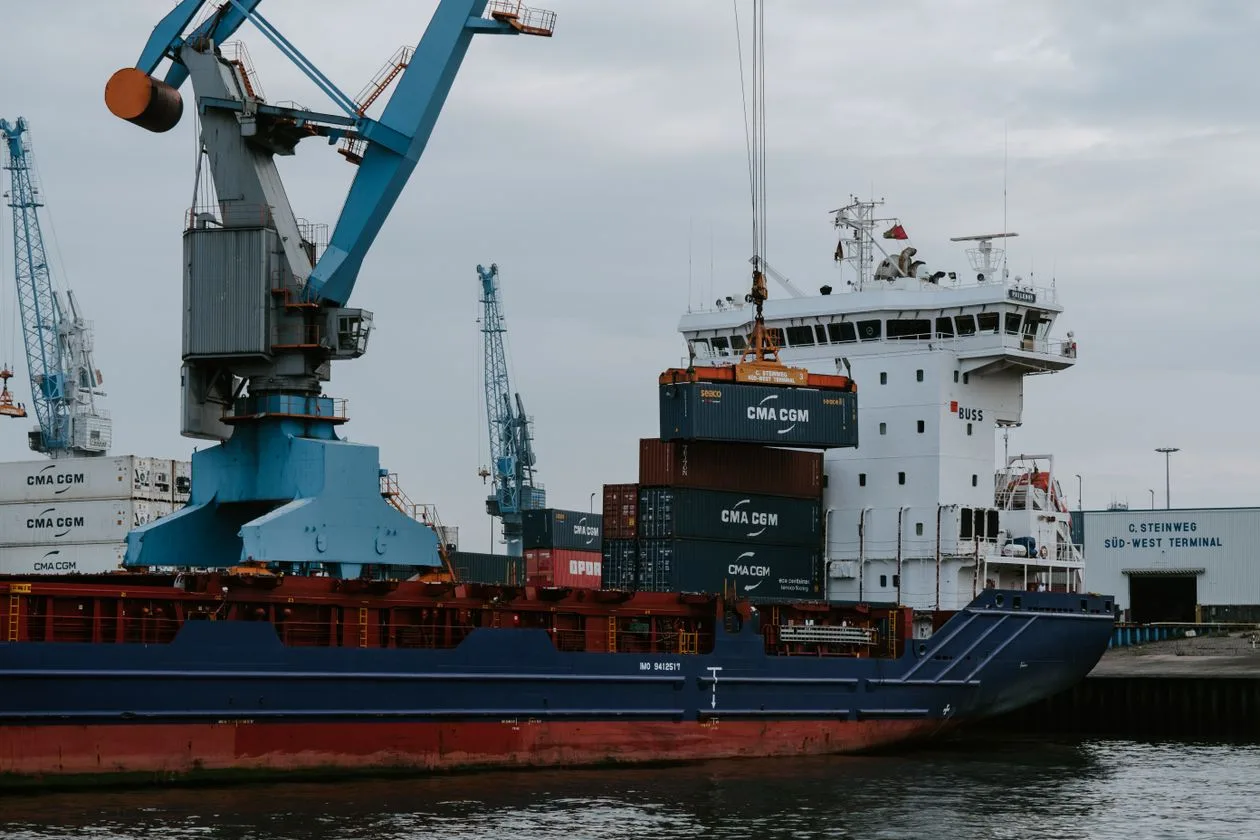
The master bill of lading is issued by the ocean carrier (shipping line) that operates the vessel. (Photo: Pexels)
A Master Bill of Lading is the bill of lading issued by the actual ocean carrier, such as Maersk, MSC, CMA CGM, Hapag-Lloyd or ONE. It is also called the Ocean Bill of Lading or Carrier's Bill of Lading.
When a freight forwarder books space on a ship, the shipping line does not usually know the individual exporters behind that booking. It only deals with the forwarder. So on the MBL:
Shipper is usually the freight forwarder or NVOCC at the origin (for example, a forwarder in Kochi or Mumbai).
Consignee is usually the forwarder's own office or agent at the destination port (for example, its partner in Dubai or Rotterdam).
Goods description covers the whole container or consolidated load, which may say "consolidated cargo" or "as per attached list".
The MBL is the contract between the forwarder and the shipping line. The shipping line will release the container at the destination only against this document (or its electronic or telex-release version).
What Is a House Bill of Lading (HBL)?
A House Bill of Lading is issued by a freight forwarder or NVOCC (Non-Vessel Operating Common Carrier) to the actual exporter. The forwarder does not own a ship, but it acts as a carrier towards you: it takes your goods, issues its own bill of lading and arranges the sea transport with a shipping line.
On the HBL:
Shipper is you, the actual exporter (for example, a spice exporter in Kerala).
Consignee is your actual buyer, or "to order" of a bank if you are being paid by letter of credit.
Notify party is usually the buyer or the buyer's customs broker.
Goods description covers only your goods, such as "200 bags of green cardamom, 8 mm, net weight 5,000 kg".
The HBL is the contract between you and the forwarder. Your buyer will collect the goods from the forwarder's agent at the destination by presenting this document.
In India, a freight forwarder or NVOCC that issues its own bills of lading must be registered as a Multimodal Transport Operator (MTO) with the Directorate General of Shipping. Before you hand your cargo to any forwarder, it is a good idea to ask for its MTO registration.
House Bill of Lading vs Master Bill of Lading: Key Differences
Here is a side-by-side comparison of the two documents:
Point
Master Bill of Lading (MBL)
House Bill of Lading (HBL)
Issued by
Shipping line (ocean carrier)
Freight forwarder or NVOCC
Issued to
Freight forwarder or NVOCC
Actual exporter (shipper)
Shipper named
Forwarder at origin
Actual exporter
Consignee named
Forwarder's agent at destination
Actual buyer or a bank
Cargo covered
Full container or consolidated load (may include many exporters)
Only one exporter's goods
Contract between
Shipping line and forwarder
Forwarder and exporter
Used to release goods from
Shipping line
Forwarder's destination agent
Common for
FCL shipments booked directly with a line; forwarder bookings
LCL (consolidated) shipments; most forwarder shipments
Other names
Ocean B/L, Carrier B/L, Line B/L
Forwarder's B/L, NVOCC B/L, House B/L
How HBL and MBL Work Together: Step by Step
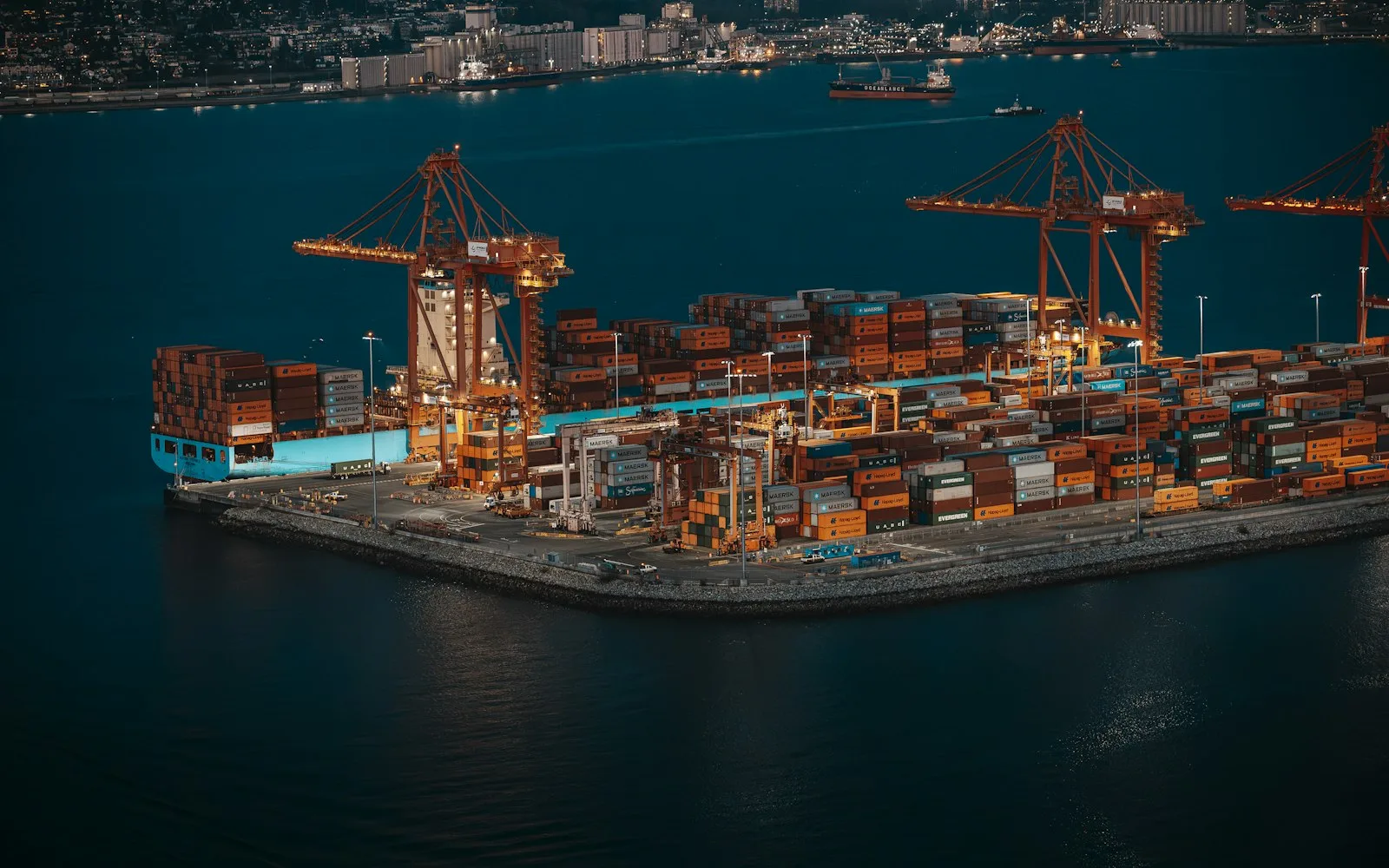
Cargo from several exporters is consolidated and stacked at the port terminal under one master bill of lading. (Photo: Pexels)
Let us follow a simple example. An Indian exporter is sending 2 tonnes of green cardamom to a buyer in Dubai. The quantity is too small for a full container, so the exporter books it as LCL (Less than Container Load) with a freight forwarder.
Booking: The exporter books space with the forwarder. The forwarder collects cargo from several exporters (cardamom from one, tea from another, garments from a third) to fill one container.
Consolidation: All the cargo is packed into one container at a Container Freight Station (CFS). This is called consolidation.
MBL issued: The forwarder books the full container with a shipping line. When the ship sails, the shipping line issues one MBL to the forwarder, showing the forwarder as shipper and its Dubai agent as consignee.
HBLs issued: The forwarder issues a separate HBL to each exporter. Our cardamom exporter gets an HBL showing itself as shipper and the Dubai buyer as consignee.
Documents sent: The forwarder sends the MBL to its Dubai agent. The exporter sends the HBL to the buyer, directly or through banks.
Arrival: The forwarder's agent in Dubai presents the MBL to the shipping line, takes delivery of the container and moves it to a CFS for de-consolidation (unpacking).
Delivery: The Dubai buyer presents the original HBL (or proof of release) to the forwarder's agent, pays any local charges, gets a delivery order and collects the cardamom.
So the MBL moves the container between the shipping line and the forwarder, while the HBL moves the goods between the forwarder and you and your buyer. Each party only deals with the document that relates to its own contract.
When Should an Exporter Use a House Bill of Lading?
Each exporter's own consignment is covered by a separate house bill of lading issued by the freight forwarder. (Photo: Pexels)
An HBL is the normal choice in these situations:
Small or LCL shipments: When your cargo does not fill a container, the forwarder consolidates it with other cargo, and you will receive an HBL.
You want one-stop service: Forwarders often handle trucking, customs clearance, documentation, insurance and sea freight together. This is simpler for small and new exporters.
Better freight rates: Large forwarders buy big volumes from shipping lines, so they can often offer lower rates than a small exporter could get directly.
Multimodal or door-to-door moves: If the cargo moves by road, rail and sea, an MTO's bill of lading can cover the whole journey.
Privacy: Because the MBL shows the forwarder, not you, as shipper, your supplier and buyer details are not shared with the shipping line or others who see the MBL.
When Should an Exporter Ask for a Master Bill of Lading?
A direct MBL, where you are named as shipper and the buyer as consignee on the shipping line's own bill, may be better in these cases:
Full container (FCL) shipments: If you ship a full 20-foot or 40-foot container, you can book directly with the line, or ask your forwarder to arrange a "direct line B/L" in your name.
Letter of credit terms: Some letters of credit ask for a "marine bill of lading issued by the carrier" or say that a "freight forwarder's bill of lading is not acceptable". In that case, an HBL can cause a discrepancy and delay your payment.
High-value cargo: With an MBL in your own name, you have a direct contract with the shipping line, with one less party in the chain.
Buyer's request: Some importers or their customs brokers prefer a line bill for faster clearance and direct tracking with the shipping line.
Bills of Lading and Letters of Credit
This is the area where most exporters face trouble, so read your letter of credit (LC) carefully before shipment.
Under the international LC rules (UCP 600), banks accept a bill of lading that is signed by the carrier, the ship's master, or a named agent on their behalf. A house bill of lading is usually accepted when the forwarder signs it as carrier (or as multimodal transport operator) or as agent for a named carrier. Problems arise when the LC wording does not allow forwarder documents, or when the HBL is not signed in the right capacity.
Simple tips:
Check whether the LC says "house bill of lading acceptable" or "freight forwarder's B/L not acceptable".
Make sure the consignee and notify party on the B/L match the LC exactly.
Check that the goods description, port of loading and port of discharge match the LC and invoice.
Ask for a draft B/L from your forwarder and get it checked before the original is printed.
If the LC needs a carrier's bill, ask the buyer to amend it, or book directly with a shipping line.
Original, Telex Release, Seaway Bill and eBL
Both HBLs and MBLs can be issued in different forms, depending on how much control you need over the goods:
Original negotiable B/L: Usually issued in a set of three originals. The buyer needs an original to collect the goods. Best when payment is through LC or documents against payment.
Telex release or surrendered B/L: The exporter surrenders the originals at the origin, and the carrier or forwarder sends a message to its destination office to release the goods without originals. Used when payment is already received or the buyer is trusted.
Sea waybill: A non-negotiable document. The goods are delivered to the named consignee without any original. Fast and simple, but it gives the exporter no control after shipment.
Electronic bill of lading (eBL): A digital version that can be transferred online. The major container lines in the Digital Container Shipping Association (DCSA), including Maersk, MSC, CMA CGM and Hapag-Lloyd, have committed to issuing 100% of their bills of lading electronically by 2030. India's 2025 Act does not yet give eBLs full legal recognition, but it is designed to allow digital adoption in the future.
Important: if your HBL is a telex release but the forwarder's MBL is an original (or the other way round), delivery can get stuck at the destination. Ask your forwarder how both documents will be released.
Risks and Common Mistakes to Avoid
Working with an unregistered forwarder: If a forwarder is not a registered MTO or does not have proper insurance, you may have little protection if something goes wrong. Always check credentials.
Forwarder does not pay the shipping line: If the forwarder fails to pay ocean freight, the shipping line can hold the container at the destination even though you paid the forwarder. Choose forwarders with a good track record.
Mismatched details: Small differences in consignee name, weight, number of packages or HS code between the HBL, MBL, invoice and shipping bill can cause customs holds and bank discrepancies.
Releasing originals too early: If you send original HBLs to the buyer before receiving payment, you lose control over the goods.
Not knowing who to claim against: If goods are damaged, your claim is against the party that issued your bill of lading. With an HBL, that is the forwarder, who will then claim against the shipping line under the MBL.
Wrong "Freight Prepaid" or "Freight Collect" mark: This must match your Incoterm. For example, under CIF the B/L should say "Freight Prepaid".
Simple Checklist Before You Accept a Bill of Lading
Shipper, consignee and notify party are correct and match the sales contract or LC
Goods description, number of packages, gross and net weight are correct
Container and seal numbers are correct
Port of loading, port of discharge and place of delivery are correct
Vessel name, voyage number and "shipped on board" date are shown
Freight Prepaid or Freight Collect matches your Incoterm
Number of originals is stated, and you know how release will happen
For an HBL: the forwarder's MTO registration and signing capacity are clear
Frequently Asked Questions
What is the main difference between a house bill of lading and a master bill of lading?
A master bill of lading is issued by the shipping line to the freight forwarder. A house bill of lading is issued by the freight forwarder to the actual exporter. The MBL covers the forwarder's whole booking; the HBL covers only one exporter's goods.
Can one shipment have both an HBL and an MBL?
Yes. In most forwarder shipments, the same goods are covered by both. The MBL is used between the shipping line and the forwarder, and the HBL is used between the forwarder, the exporter and the buyer.
Which bill of lading does the buyer need to collect the goods?
If you shipped through a forwarder, the buyer needs the house bill of lading (or proof of telex release) to collect the goods from the forwarder's destination agent. The forwarder's agent uses the MBL to collect the container from the shipping line.
Is a house bill of lading accepted by banks under a letter of credit?
Often yes, if the forwarder signs it as the carrier or as agent for a named carrier, and the LC does not exclude forwarder bills. Always read the LC terms, because some letters of credit specifically say that a freight forwarder's bill of lading is not acceptable.
Is a house bill of lading less safe than a master bill of lading?
Not by itself. An HBL from a reputable, registered forwarder is widely used and safe. The extra risk comes from the forwarder in the middle, so choose a reliable, MTO-registered forwarder with a good payment record with shipping lines.
What is an NVOCC?
An NVOCC (Non-Vessel Operating Common Carrier) is a company that acts as a carrier and issues its own bills of lading, but does not own or run ships. It buys space from shipping lines and sells it to exporters.
Conclusion
The difference between a house bill of lading and a master bill of lading is simple once you know who is talking to whom. The MBL is the shipping line's document for the forwarder. The HBL is the forwarder's document for you. For small and LCL shipments, the HBL is normal and convenient. For full containers, strict letters of credit or high-value cargo, a direct master bill may be the better choice.
Whichever you use, check every detail on the draft, match it with your invoice and LC, and work only with trusted, registered partners. Correct shipping documents mean faster customs clearance, quicker payment and happier buyers.
At INFOTOM, we check every bill of lading against the contract and letter of credit before our spice shipments leave India, so our buyers receive clean documents and their goods on time.
Sources: Bills of Lading Act, 2025 (Act 18 of 2025), Ministry of Ports, Shipping and Waterways, in force from 10 September 2025; Digital Container Shipping Association (DCSA), 100% eBL by 2030 commitment; ICC Uniform Customs and Practice for Documentary Credits (UCP 600); Multimodal Transportation of Goods Act, 1993 (MTO registration with the Directorate General of Shipping). This article is for general guidance and is not legal advice.