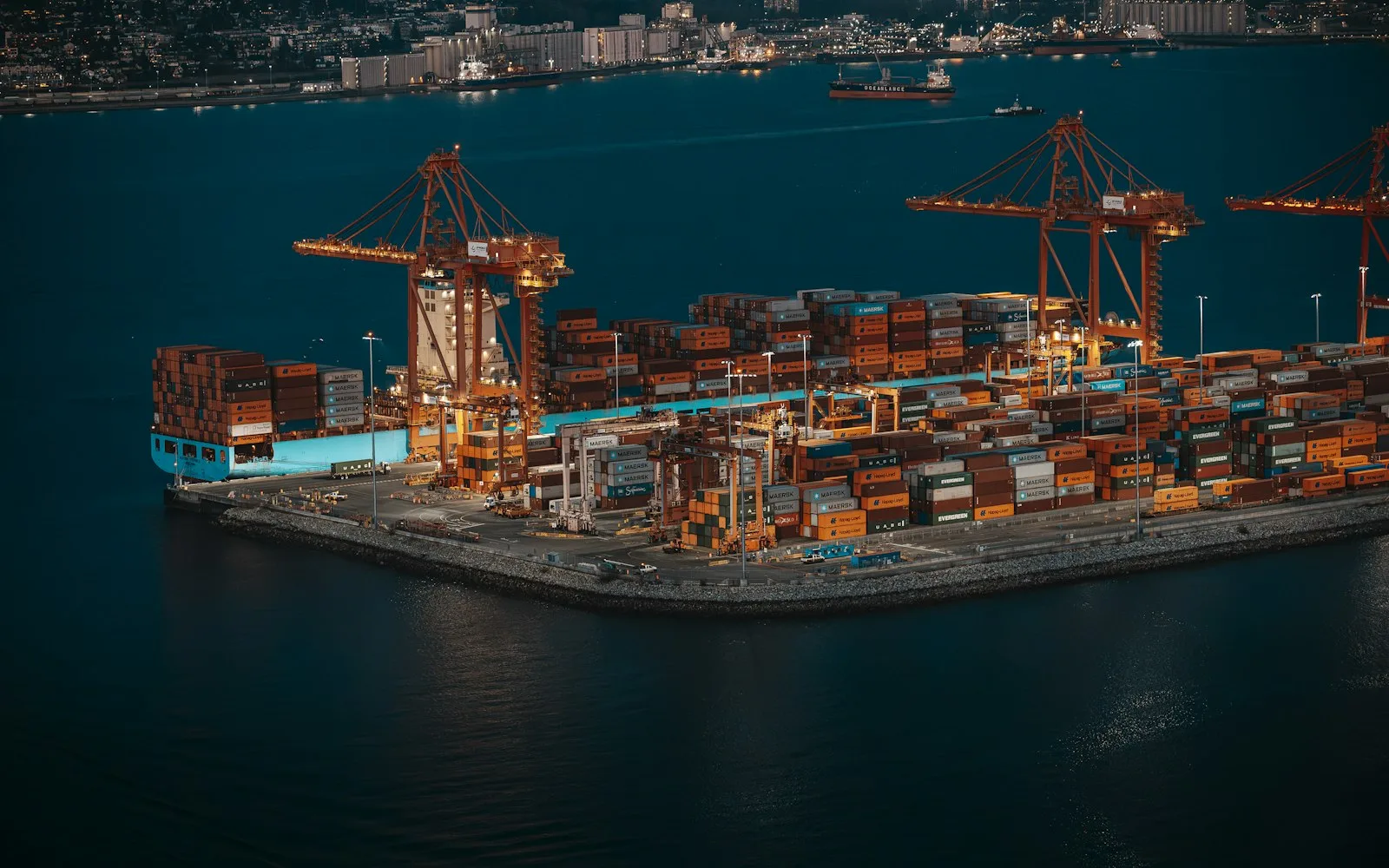
Every day, ships leave Indian ports full of spices, rice, medicines, machines and mobile phones. Other ships arrive carrying crude oil, gold, electronics and edible oil. This buying and selling with the world is called international trade, and it has a direct effect on two numbers that touch every Indian family: GDP (how much the economy produces) and inflation (how fast prices rise).
In this guide, we explain in simple English how importing and exporting affect GDP and inflation, using India's latest trade data and real examples from 2026.
Quick Answer
Exports increase a country's GDP because they bring foreign money in for goods made at home. Imports are subtracted in the GDP formula because that money is spent on goods made abroad. When exports are higher than imports, the country has a trade surplus. When imports are higher, it has a trade deficit. Trade also affects inflation: costly imports (like crude oil) and a weak currency push prices up, while cheaper imports and strong competition can keep prices down.
What Are Imports and Exports?
An export is a product or service that is made in one country and sold to buyers in another country. When an Indian company ships turmeric to Germany or an Indian IT firm builds software for a US client, that is an export.
An import is a product or service that a country buys from abroad. When India buys crude oil from the Middle East or electronics from China, that is an import.
The difference between the two is called net exports.
Net Exports = Exports − Imports
If the result is positive, the country has a trade surplus. If it is negative, the country has a trade deficit.
How Imports and Exports Fit Into GDP
GDP (Gross Domestic Product) is the total value of all goods and services produced inside a country in a year. Economists usually calculate it with this simple formula:
GDP = C + I + G + (X − M)
- C = Consumption (what households spend)
- I = Investment (what businesses spend on factories, machines and buildings)
- G = Government spending
- X = Exports
- M = Imports
So (X − M) is net exports. Exports are added because they are made at home. Imports are subtracted because they were made somewhere else.
A Simple Example
Imagine a small country where, in one year:
- Families spend ₹1,000 crore (this includes ₹200 crore on imported phones)
- Businesses invest ₹300 crore
- The government spends ₹400 crore
- Farmers and factories export ₹250 crore of spices and textiles
- Total imports are ₹200 crore
GDP = 1,000 + 300 + 400 + (250 − 200) = ₹1,750 crore
Notice that the ₹200 crore of imported phones was already counted inside family spending. We subtract imports only so that we do not count foreign production as our own.
Do Imports Reduce GDP? A Common Myth
Many people think that every rupee spent on imports directly lowers GDP. That is not fully true. Imports are subtracted in the formula only to remove double counting, because imported goods already appear in consumption, investment or government spending.
In real life, imports often help GDP grow. India imports machines, chemicals and electronic parts that local factories use to make finished goods, many of which are then exported. Without these imports, many Indian industries could not produce at all.
The real problem starts only when a country keeps buying far more than it sells for a long time, especially non-productive items, because this puts pressure on the currency and on foreign exchange reserves.
How Exports Boost GDP
Exports help the economy in more ways than just the number in the formula:
1. More income for producers. When a farmer in Kerala sells cardamom to buyers abroad, he earns more than he would in a crowded local market.
2. More jobs. Export demand creates work in farms, processing units, packaging, transport, ports and shipping.
3. A multiplier effect. The workers who earn from exports spend that money in local shops, which creates even more income in the economy.
4. Foreign exchange. Export earnings bring in dollars, which India needs to pay for essential imports like crude oil.
5. Better quality. Selling to strict foreign markets forces businesses to improve testing, hygiene and packaging, which also benefits local customers.
How Imports and Exports Affect Inflation
Inflation means a general rise in prices. Trade affects inflation through four main channels.
1. Imported Inflation
When the price of an imported product rises globally, Indians pay more for it at home. This is called imported inflation. Crude oil is the biggest example. India buys most of its oil from abroad, so when world oil prices jump, petrol, diesel, transport, plastic, fertiliser and even vegetable prices go up.
2. The Exchange Rate (The Rupee)
Most global trade is paid in US dollars. If the rupee becomes weaker, India must pay more rupees for the same dollar amount of imports. This makes imported goods costlier and adds to inflation.
On the other side, a weaker rupee makes Indian goods cheaper for foreign buyers, which can help exports. A stronger rupee does the opposite: imports become cheaper and exports become harder to sell.
There is also a feedback loop. When imports grow much faster than exports, more rupees are sold to buy dollars, which can weaken the rupee further.
3. Strong Export Demand at Home
If foreign demand for a product is very high, more of it leaves the country. This can reduce local supply and raise local prices. This is why the government sometimes limits exports of items like onions or rice when domestic prices rise sharply.
4. Cheaper Imports and Competition
Imports can also lower inflation. When cheaper or better products come in from abroad, local sellers have to keep their prices competitive. Imports of edible oil, pulses and electronic parts often help keep prices in check when local supply is short.
India's Latest Trade Numbers (FY 2025-26)
Here is what India's trade looked like in the financial year 2025-26, based on Ministry of Commerce data reported in the media:
- Total exports (goods + services): about $860 billion, up 4.22% from $825.26 billion the year before
- Merchandise (goods) exports: about $441.78 billion, only a small rise from $437.70 billion
- Merchandise imports: about $774.98 billion, up from $721.20 billion
- Services exports: about $418.31 billion, up from $387.55 billion
- Combined trade deficit (goods + services): about $119.30 billion, up from $94.66 billion
What this tells us: India buys far more goods than it sells, so the goods trade deficit is large (above $330 billion). But India earns a big surplus from services such as IT and business services, which covers a large part of that gap.
The trend has continued into 2026. In May 2026, India's merchandise exports touched a record monthly high of $45.20 billion. Even so, the overall trade deficit widened that month, because imports grew faster than exports.
2026 Case Study: Crude Oil, the Rupee and Rising Prices
The events of 2026 are a clear real-world lesson in how imports drive inflation.
Conflict in West Asia pushed Brent crude oil prices above $100 per barrel again in September 2026. The average price of the Indian crude oil basket rose to about $102 per barrel in September, up from about $90 in August.
Because India depends heavily on imported oil, this quickly showed up in prices:
- Retail inflation (CPI) rose to 5.54% in September 2026, up from 4.83% in August. This was the highest level in 23 months and well above the RBI's target of 4%.
- Food inflation climbed to 7.74% in September.
- Wholesale inflation (WPI) jumped to 11.39% in September, with petroleum and natural gas prices up more than 57% compared to a year earlier.
- In its October 2026 policy review, the RBI raised its inflation forecast for FY 2026-27 from 5.0% to 5.2%, pointing to crude oil prices, food costs and weather risks.
Experts also pointed out that a weaker rupee made dollar-priced imports even more expensive. This is exactly the chain we explained above: costly imports lead to a wider trade gap, a softer rupee, and higher prices at home.
Where Spice Exports Fit In
Spices are a small but important part of India's export story. India is one of the world's largest producers and exporters of spices and grows 75 of the 109 spices listed by the ISO. In 2023-24, India's spice exports were worth about $4.25 to $4.4 billion, giving it roughly 12% of the global spice trade. The Spices Board has set a target to raise spice exports to $10 billion by 2030.
In 2025-26, chilli remained the top spice export by value at nearly $1.18 billion, followed by spice oils and oleoresins, cumin, small cardamom and turmeric. Small cardamom exports more than doubled in value during the year.
Spice exports show how trade supports GDP at the ground level. Each container of chilli, turmeric or cardamom brings foreign income to farmers, processors, packers and exporters across states like Kerala, Andhra Pradesh, Gujarat, Rajasthan and Karnataka. At INFOTOM, this is the world we work in every day: taking quality Indian spices to buyers around the globe.
Trade Surplus vs Trade Deficit: Which Is Better?
A trade surplus is not always good, and a trade deficit is not always bad.
A trade surplus can mean strong industries and strong foreign demand. But a surplus can also happen when people at home are spending too little.
A trade deficit can mean a growing economy where people and businesses are buying more, including machines and raw materials for future growth. It becomes risky only when it stays very large for a long time, when it is caused mostly by fuel and gold rather than productive goods, or when it weakens the currency and fuels inflation.
For India, the strong services surplus and growing goods exports help balance a large goods deficit. The biggest weak point remains the heavy dependence on imported crude oil.
What This Means for You
For consumers: When world oil prices rise or the rupee falls, expect higher prices for fuel, travel, food and many daily items within a few weeks or months.
For businesses: A weaker rupee raises the cost of imported raw materials but makes exports more competitive. Exporters can benefit, while import-heavy businesses may need to protect their margins.
For farmers and small producers: Growing export demand, as in spices, opens bigger markets and better prices for quality produce.
For investors and students: Watch the monthly trade data, the rupee-dollar rate and crude oil prices together. They usually tell you where inflation and interest rates are heading.
Key Takeaways
- GDP = C + I + G + (Exports − Imports)
- Exports add to GDP; imports are subtracted only to avoid double counting
- Imports of machines and raw materials often help GDP grow
- Costly imports, especially crude oil, are a major cause of inflation in India
- A weak rupee makes imports costlier and exports cheaper
- India had a combined trade deficit of about $119 billion in FY 2025-26, with a large goods deficit balanced partly by a services surplus
- In 2026, high oil prices pushed retail inflation to 5.54% and wholesale inflation to 11.39% in September
Frequently Asked Questions
How do exports increase GDP?
Exports are goods and services made at home and sold abroad. They are added in the GDP formula, and they also create jobs and income that people spend inside the country, which raises GDP further.
Why are imports subtracted from GDP?
GDP measures only what is produced inside the country. Imports are already counted in consumption or investment spending, so they are subtracted to avoid counting foreign production as domestic.
Can imports cause inflation?
Yes. If imported goods such as crude oil become more expensive, or if the rupee weakens, the cost of imports rises and pushes up prices across the economy. This is called imported inflation.
Does a weak rupee help exports?
Generally yes. A weaker rupee makes Indian products cheaper for foreign buyers, which can boost exports. But it also makes imports more expensive, which can raise inflation.
Does India have a trade surplus or a trade deficit?
India has a trade deficit. In FY 2025-26, the combined deficit for goods and services was about $119 billion. India runs a large deficit in goods trade but a big surplus in services trade.
Why does crude oil matter so much for India's inflation?
India imports most of the crude oil it uses. Oil affects fuel, transport, fertiliser and manufacturing costs, so a rise in global oil prices spreads to the prices of many everyday goods.
Conclusion
Imports and exports are not just numbers in a government report. They decide how fast India's economy grows, how strong the rupee is, and how much you pay for petrol, vegetables and everyday goods. Exports bring in income, jobs and foreign currency, while smart imports help industries grow. But when import bills rise too quickly, especially for oil, inflation follows.
Understanding this simple link between trade, GDP and inflation helps consumers plan better, helps businesses price smarter, and helps exporters like us see why taking more Indian products to the world matters for the whole economy.
Sources: Ministry of Commerce and Industry trade data (via India Briefing, India Sea Trade News and other reports), MoSPI CPI data for September 2026, wholesale price index data for September 2026, Spices Board of India export estimates for 2025-26, and RBI's October 2026 monetary policy review.