From the soil of India, through our factory, to your family — and onward to the world.
Curcumin Is Not Uniform: Why Every Batch of Lakadong Turmeric Must Be Tested
Lakadong turmeric is famous for high curcumin, but that number is not fixed. It changes from farm to farm, village to village and batch to batch. Here is why, and why every batch needs its own lab test.
Lakadong turmeric from Meghalaya is famous around the world for one reason: its high curcumin content. Buyers pay a premium for it, and many sellers print a curcumin percentage on the pack. But there is one simple truth every buyer should know: curcumin is not uniform.
The curcumin level in Lakadong turmeric changes from farm to farm, village to village, season to season and even batch to batch. In this guide, we explain in simple English why this happens, how curcumin is tested, and why every new batch needs its own lab test.
Quick Answer
Curcumin is a natural plant compound, so its level depends on soil, altitude, weather, farming practice, harvest time, drying method and storage. Reported curcumin levels for Lakadong turmeric range from about 6.8% to as high as 12%, compared with roughly 2-3% for many ordinary varieties. Because every lot is different, the only honest way to know the curcumin in a batch is to test that batch in a lab, using a clearly stated method such as HPLC.
What Is Lakadong Turmeric?
The green, rain-fed hills of Meghalaya, home of GI-tagged Lakadong turmeric
Lakadong turmeric is grown in Lakadong and nearby villages in the Jaintia Hills of Meghalaya, in northeast India. It is known for its deep orange-yellow colour, strong aroma and high curcumin. It is traditionally grown without chemical fertilisers.
GI tag: Lakadong Turmeric received a Geographical Indication tag on 30 March 2024, the first turmeric from Meghalaya to do so
Who grows it: about 14,000 farmers across 43 villages, on around 1,753 hectares
Government support: the Meghalaya government runs Mission Lakadong to expand cultivation and improve farmer incomes
Curcumin: reported between about 6.8% and 12%, depending on the source and sample
The GI tag protects the name, so only turmeric grown in the defined Lakadong region can be sold as Lakadong Turmeric.
What Is Curcumin?
Curcumin is the main natural pigment in turmeric. It gives turmeric its golden colour and is the compound most studied for turmeric's health benefits. Turmeric actually contains a family of three related compounds called curcuminoids:
Curcumin (the largest share)
Demethoxycurcumin
Bisdemethoxycurcumin
This matters when you read a test report, because some methods measure only curcumin while others measure all three together.
Why Curcumin Varies From Farm to Farm
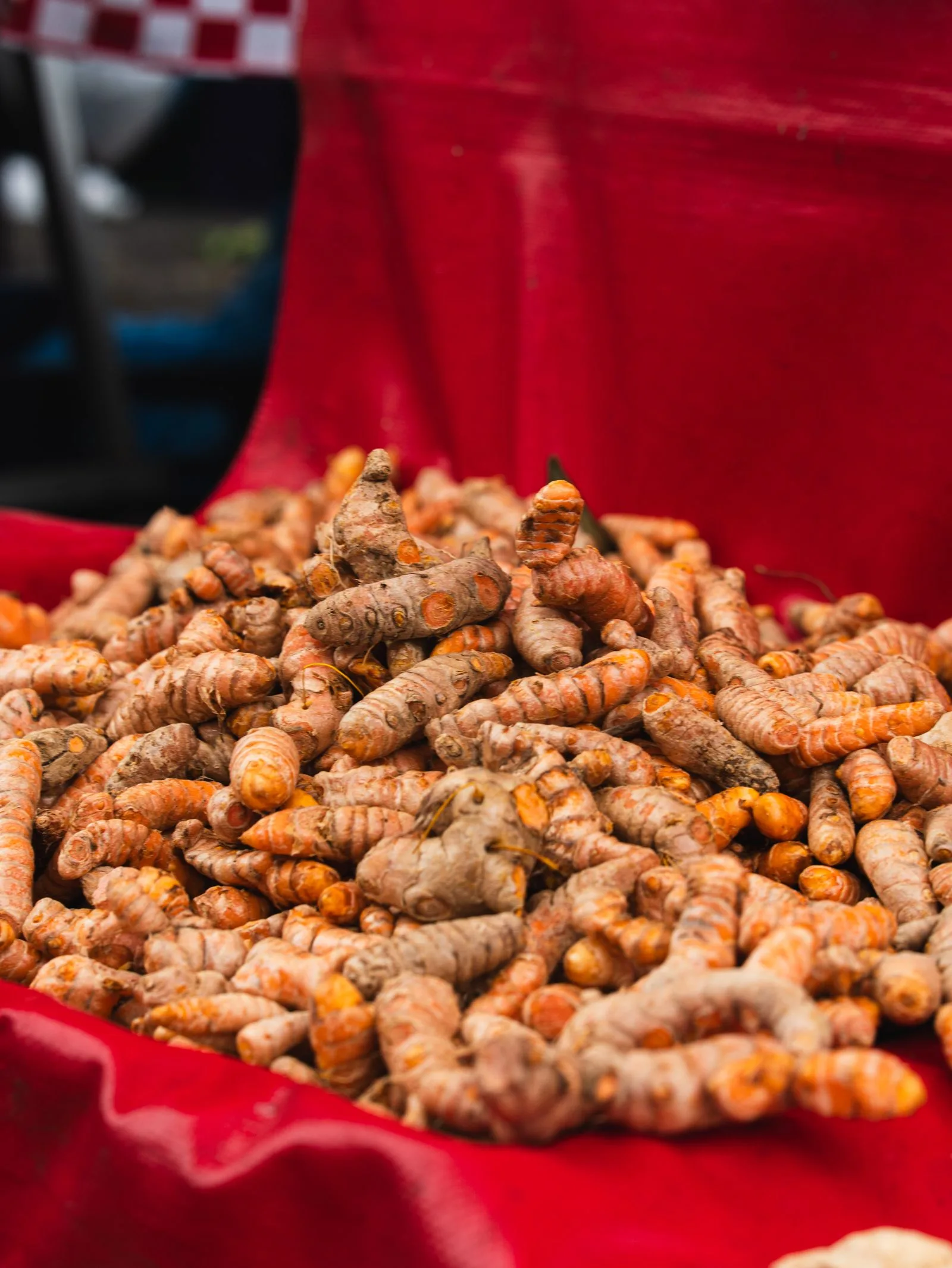
Freshly harvested turmeric roots: no two harvests have exactly the same curcumin
1. Soil and Nutrition
Soil type, acidity, organic matter and nutrients all affect how a turmeric plant builds curcumin. A study on turmeric grown in the acid soils of northeast India, published in the Indian Journal of Agricultural Sciences, found that soil management practices had a significant effect on turmeric's phytochemical quality.
2. Altitude and Climate
Two farms only a few kilometres apart can sit at different heights, receive different rainfall and get different hours of sunlight. These small differences change how the plant grows and how much curcumin it stores in its rhizomes.
3. Seed Material and Plant Genetics
Farmers use their own rhizomes as seed. Over many years, small genetic differences build up between villages and even between farms, which affects curcumin levels.
4. Harvest Time and Maturity
Turmeric is usually harvested when the plant leaves dry up, several months after planting. Rhizomes harvested too early or too late can have different curcumin levels. Even within one plant, the same study found that fresh mother rhizomes had 15-38% more curcumin than finger rhizomes.
5. Curing, Drying and Grinding
After harvest, turmeric is cleaned, often boiled (cured), dried and ground. Each step affects the final curcumin. The same Indian study found that drying fresh rhizomes into powder reduced curcumin by about 2-8%. Overheating, poor drying and slow processing can cause bigger losses.
6. Storage
Curcumin breaks down with exposure to light, heat, air and moisture. A batch tested at harvest may show a lower value after months of poor storage.
7. Mixing and Adulteration
Because Lakadong turmeric sells at a premium, some sellers mix it with cheaper turmeric from other regions. This lowers the true curcumin content and is exactly what the GI tag aims to stop.
Why Every Batch Needs Its Own Test
Since curcumin changes with so many factors, one old test report cannot speak for a new batch. A responsible supplier tests each lot because:
Honesty: the buyer gets the real curcumin value, not a marketing number
Fair pricing: higher-curcumin batches can be priced fairly, and farmers producing better turmeric can be rewarded
Consistency: food, supplement and colour companies need a known curcumin level to make consistent products
Traceability: a batch number linked to a test report shows where the turmeric came from
Protecting the GI name: testing helps catch blended or fake "Lakadong" turmeric
How Curcumin Is Tested
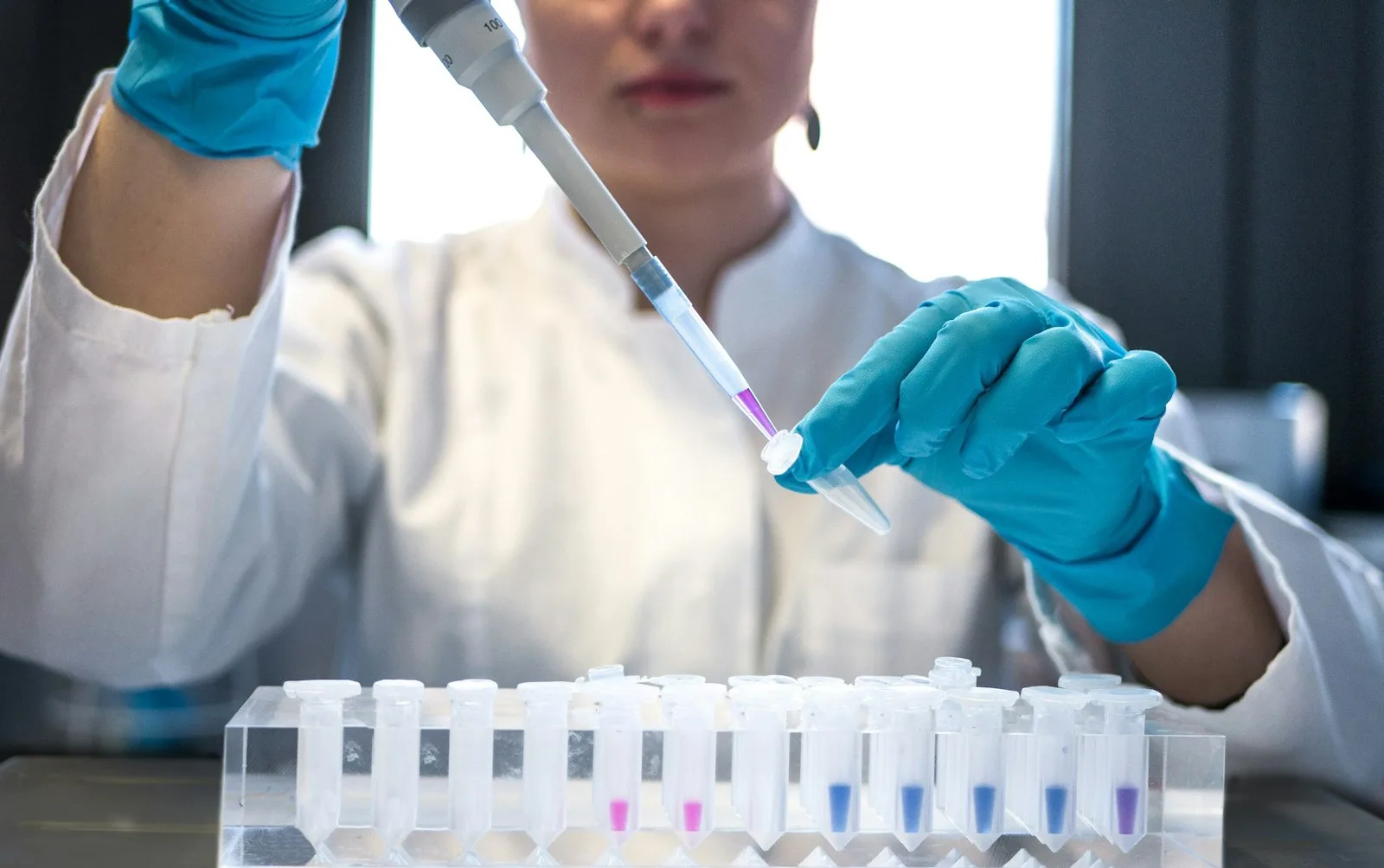
Laboratory testing is the only reliable way to know the curcumin in a batch
HPLC (High-Performance Liquid Chromatography)
HPLC is the most precise common method. It separates curcumin, demethoxycurcumin and bisdemethoxycurcumin and measures each one. It is the preferred method for supplements, pharmaceuticals and premium buyers who want an exact curcumin figure.
Spectrophotometric Methods (UV-Vis, ASTA and Similar)
These faster and cheaper methods measure the total yellow colouring matter, which includes all curcuminoids together. They are useful for routine quality checks, but they usually give a higher number than HPLC curcumin alone, because they count all three curcuminoids.
Why the Method Matters
A report showing "9% curcuminoids by spectrophotometry" and another showing "7% curcumin by HPLC" may describe very similar turmeric. Always check which method was used and whether the result is for curcumin only or total curcuminoids. Also check whether the result is on a "dry basis" or "as is" basis, since moisture changes the percentage.
What Buyers Should Ask For
Ask for a batch-wise Certificate of Analysis that states the test method and result
If you are buying Lakadong turmeric, especially for export, food manufacturing or supplements, ask your supplier for:
A Certificate of Analysis (CoA) for the exact batch, with a batch number that matches the bags
The test method used (HPLC or spectrophotometric) and whether the result is curcumin or total curcuminoids
Results from an accredited laboratory, such as an NABL-accredited lab in India
Moisture content and the basis of the curcumin result
Safety tests: aflatoxins, pesticide residues, heavy metals such as lead, and microbial counts
Proof of origin, such as GI authorised user details or farm and village records
Good suppliers are happy to share this. If a seller quotes one fixed curcumin figure for every shipment without batch-wise reports, ask why.
Tips for Sampling a Batch Correctly
A test is only as good as the sample. To get a result that truly represents a batch:
Take small samples from many bags across the lot, not just the top bag
Mix them well and divide into a lab sample and a reference sample
Seal and label the samples with the batch number and date
Keep the reference sample in a cool, dark place in case a re-test is needed
Key Takeaways
Lakadong turmeric is a GI-tagged turmeric from Meghalaya's Jaintia Hills, prized for high curcumin
Reported curcumin levels range from about 6.8% to 12%, far above many ordinary varieties
Curcumin varies with soil, altitude, seed, harvest time, processing and storage
Every batch should have its own lab test and Certificate of Analysis
Check the test method: HPLC curcumin and spectrophotometric curcuminoids are not the same number
Frequently Asked Questions
What is the curcumin content of Lakadong turmeric?
Reported values range from about 6.8% to 12%. The exact figure depends on the farm, harvest, processing and test method, which is why each batch should be tested.
Why does curcumin vary from batch to batch?
Curcumin is a natural plant compound. Its level changes with soil, altitude, rainfall, seed material, harvest time, drying method and storage conditions.
Which is the best method to test curcumin?
HPLC is the most precise, because it measures curcumin and related curcuminoids separately. Spectrophotometric methods are faster and cheaper but usually show higher values because they measure total curcuminoids.
When did Lakadong turmeric get its GI tag?
Lakadong Turmeric received its Geographical Indication tag on 30 March 2024.
How can I be sure I am buying real Lakadong turmeric?
Buy from suppliers who can show batch-wise lab reports, proof of origin from the Lakadong region and, where possible, links to GI authorised users or farmer cooperatives.
Conclusion
Lakadong turmeric is one of India's finest spices, but nature does not produce identical batches. Different farms, villages and harvests give different curcumin levels. That is not a weakness; it is the reality of a natural product. The answer is simple: test every batch, share the results honestly, and let buyers see exactly what they are getting.
At INFOTOM, we believe quality should be proven, not just claimed. Every batch of turmeric we ship comes with its own lab report, so our buyers know the real curcumin content of the turmeric they receive.
Sources: Meghalaya Farmers' (Empowerment) Commission press release on the Lakadong Turmeric GI tag (3 April 2024); Wikipedia, "Lakadong turmeric"; Choudhury et al., "Effects of pre-harvest soil management practices and post-harvest processing on phytochemical qualities of turmeric (Curcuma longa)", Indian Journal of Agricultural Sciences (2017).